
Introduction
The 21st century is witnessing a technological revolution in mobility. Autonomous systems—ranging from self-driving cars and delivery drones to warehouse robots—are transforming how goods and people move. What was once science fiction is now a growing reality, with companies like Tesla, Waymo, Amazon, and DJI leading the charge. These technologies promise to increase efficiency, reduce human error, and reshape industries, while also raising important societal and ethical questions.
This article explores the rise of autonomous systems, their applications, benefits, challenges, and the impact they are likely to have on everyday life by 2035.
Self-Driving Cars
Self-driving cars have become the most recognized symbol of autonomous technology. Equipped with AI-powered sensors, cameras, and radar, these vehicles can navigate roads, avoid obstacles, and make real-time decisions without human intervention. Beyond convenience, autonomous cars have the potential to drastically reduce accidents caused by human error, which accounts for over 90% of traffic incidents today.
Major companies are conducting large-scale tests of autonomous taxis and ride-hailing services. As the technology matures, cities may see a decrease in private car ownership, increased ride-sharing, and more efficient traffic management, contributing to cleaner, safer urban environments.
Delivery Drones and Robots
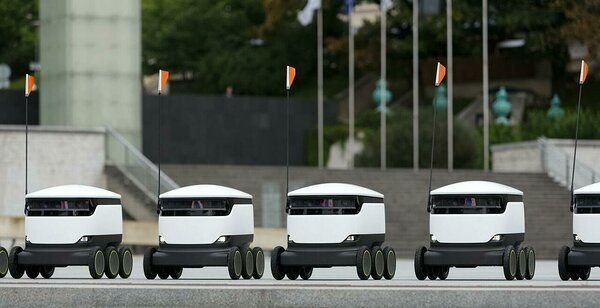
The logistics industry is also undergoing a transformation. Drones and ground-based delivery robots are now capable of transporting packages, medical supplies, and even food to consumers with minimal human intervention. Companies like Amazon Prime Air and Starship Technologies are pioneering these systems, which offer faster, contactless deliveries and reduced operational costs.
In addition, autonomous delivery solutions can improve accessibility in rural or hard-to-reach areas, where traditional logistics are slow or costly. During emergencies or natural disasters, drones can also deliver essential supplies without putting human workers at risk.
Industrial and Warehouse Automation
Autonomous robots are increasingly common in warehouses and manufacturing facilities. These robots can move inventory, assemble products, and perform repetitive tasks with high precision. By integrating AI with robotic systems, companies can optimize workflow, reduce labor costs, and increase productivity.
In factories, autonomous systems are paired with predictive analytics to anticipate maintenance needs, minimize downtime, and enhance operational efficiency. This fusion of AI and robotics is leading to the rise of smart factories and the broader concept of Industry 5.0.
Benefits of Autonomous Systems
Autonomous technology offers multiple advantages. Safety is a primary benefit, especially in transportation, where eliminating human error can save thousands of lives each year. Efficiency improvements in logistics, manufacturing, and supply chains reduce costs and environmental impact. Autonomous systems can also operate 24/7 without fatigue, increasing productivity and service availability.
Moreover, these technologies can improve accessibility for individuals with disabilities, elderly populations, and people living in remote areas, enabling mobility and services that were previously unavailable.
Challenges and Considerations
Despite the promise, autonomous systems face significant hurdles. Regulatory frameworks must adapt to address liability, safety standards, and airspace management for drones. Cybersecurity is another concern, as autonomous vehicles and robots are vulnerable to hacking, data theft, and operational disruption.
Ethical questions also arise, particularly regarding decision-making in critical scenarios, such as self-driving cars facing unavoidable accidents. There is also the economic impact of automation on jobs, as autonomous systems could displace millions of workers in driving, logistics, and manual labor sectors. Society will need strategies to retrain workers and manage the transition.
The Future of Autonomous Everything
By 2035, autonomous systems are expected to become deeply integrated into daily life. Cities may feature fleets of autonomous taxis and buses, drones delivering everything from groceries to medicine, and factories operating almost entirely with robotic workers. AI-powered coordination of these systems will make urban mobility more efficient, logistics faster, and industries more productive.
The convergence of AI, robotics, and IoT will create a seamless ecosystem of autonomous operations. Humans will transition from direct operators to overseers, monitoring systems and intervening only when necessary. This future promises greater safety, convenience, and efficiency, but it requires careful planning, regulation, and ethical consideration to ensure technology benefits society as a whole.
Conclusion
The rise of autonomous cars, drones, and delivery robots marks a new era of technological transformation. While the benefits—safety, efficiency, accessibility—are clear, challenges in regulation, ethics, cybersecurity, and workforce impact cannot be ignored.
As autonomous technology continues to advance, society must embrace it thoughtfully, ensuring that innovation serves human needs and fosters a safer, more efficient, and more connected world. The next decade will determine how deeply autonomous systems integrate into everyday life and shape the future of mobility, logistics, and industry.
